
When is it time to discuss surgery?
A cataract is clouding of the eye’s natural lens. It may cause blurred or faded vision, glare, halos, difficulty driving at night, frequent spectacle changes or reduced contrast.
There is no single “maturity” level for everyone. The decision depends on visual difficulty, examination findings, other eye conditions and what the patient needs to do safely.
- Difficulty reading faces, signs or medicine labels
- Glare from headlights or bright sunlight
- Vision no longer improves adequately with spectacles
Assessment, operation and lens choice
The assessment usually includes vision testing, slit-lamp and retinal examination, eye pressure and biometry. Existing corneal, retinal or optic-nerve disease can affect the expected result.
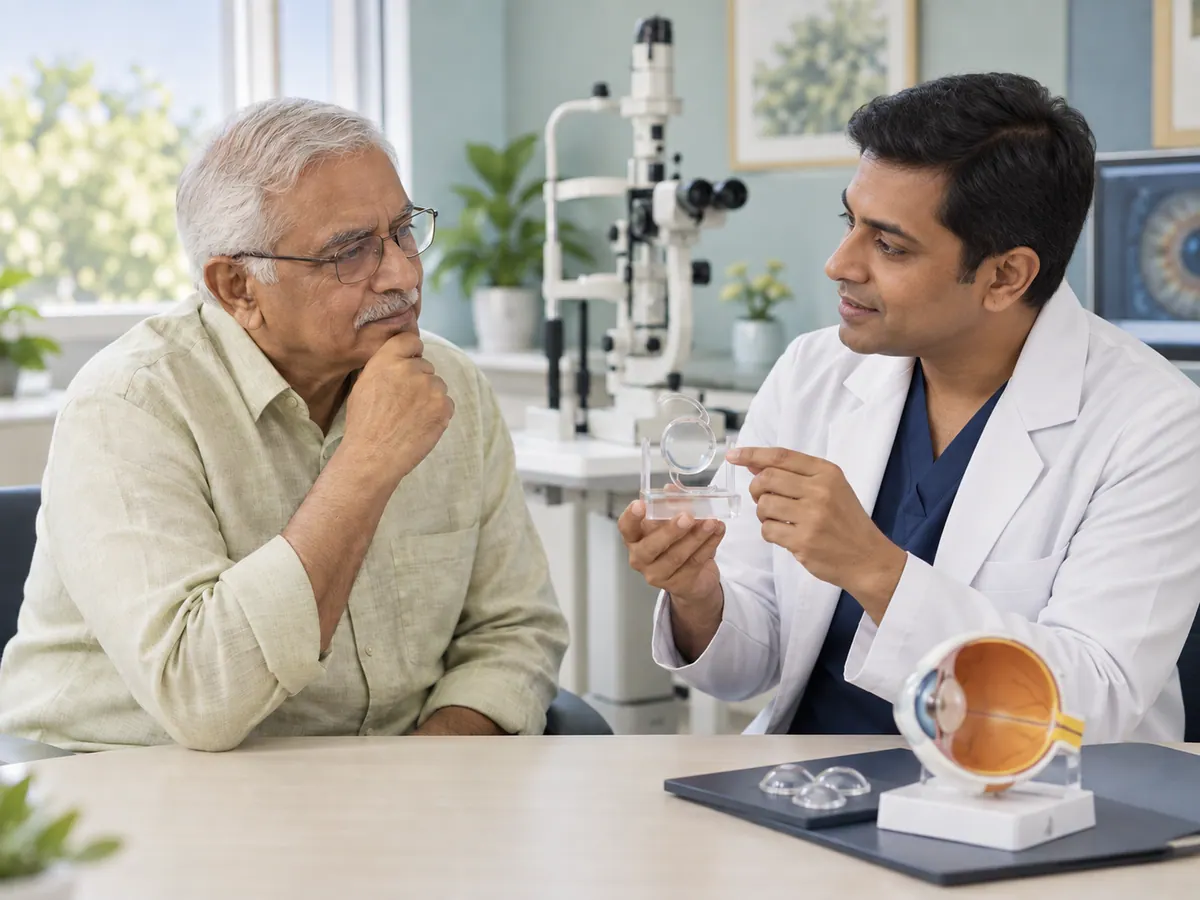
During modern surgery the cloudy lens is removed through a small incision and an artificial lens is placed inside the eye. Monofocal, toric and multifocal or extended-range lenses solve different optical problems; no lens is universally best.
Recovery is gradual
Use drops exactly as prescribed, avoid rubbing the eye and ask when bathing, work, exercise and driving may resume. Vision can fluctuate while the eye heals.
Surgery improves clarity but does not guarantee spectacle independence or reverse damage caused by glaucoma, retinal disease or another condition.
How to prepare for cataract surgery
Preparation begins with a complete medicine and health review. Tell the surgeon about diabetes, blood-pressure treatment, blood thinners, prostate medicines, allergies and previous eye procedures. Do not stop prescribed medicine on your own. The team will explain fasting, drops, transport and whether any physician clearance or blood tests are appropriate for you.
Biometry measurements are used to calculate intraocular-lens power, but the result is an estimate rather than a promise of zero spectacle power. Discuss the activities that matter most—distance driving, reading, computer work or astigmatism correction—because the preferred lens strategy depends on your eyes, lifestyle and tolerance for optical trade-offs.
Results, risks and the second eye
Most cataract operations are short day-care procedures, yet every operation has risk. Infection, inflammation, pressure change, corneal swelling, retinal problems, lens-position issues and an unexpected spectacle prescription are uncommon but important consent topics. Later clouding behind the implant is not the cataract returning and may be treated with YAG laser when clinically appropriate.
The second eye is planned after considering recovery of the first eye, visual imbalance and medical circumstances. Some people notice colour and brightness differences between eyes while waiting. A postoperative review confirms healing and helps decide when spectacles should be updated. Keep the implant details and discharge record for future eye care.
Questions patients commonly ask
Can cataract be removed with medicines or eye drops?+
No proven medicine or eye drop clears an established cataract. Better lighting and spectacles may help temporarily, but surgery is the definitive treatment when the cataract meaningfully affects vision.
Will I still need glasses after cataract surgery?+
Possibly. The need depends on the chosen lens, astigmatism, healing and the health of the cornea and retina. Even premium lenses cannot guarantee complete spectacle independence.
Is cataract surgery painful?+
Anaesthetic drops or local anaesthesia usually keep the procedure comfortable. Pressure, light or mild awareness may be noticed. Increasing pain after surgery is not expected and needs prompt contact with the surgeon.
Clinical references
This guide is informed by patient guidance from established public-health and professional medical bodies.