
Confirm the cause
Vision, implant position, capsule, pressure and the back of the eye are assessed.
A quick outpatient laser procedure for posterior capsule opacification—planned only after confirming that the capsule, rather than another eye condition, is limiting vision.
During cataract surgery, the cloudy natural lens is removed but its clear outer capsule is retained to hold the artificial lens implant. Months or years later, this capsule can become hazy—a condition called posterior capsule opacification, or PCO.
PCO can cause misty vision, glare, reduced contrast or difficulty in bright light. Similar symptoms can also come from corneal, retinal or optic-nerve disease, so the eye is examined before laser treatment is recommended.
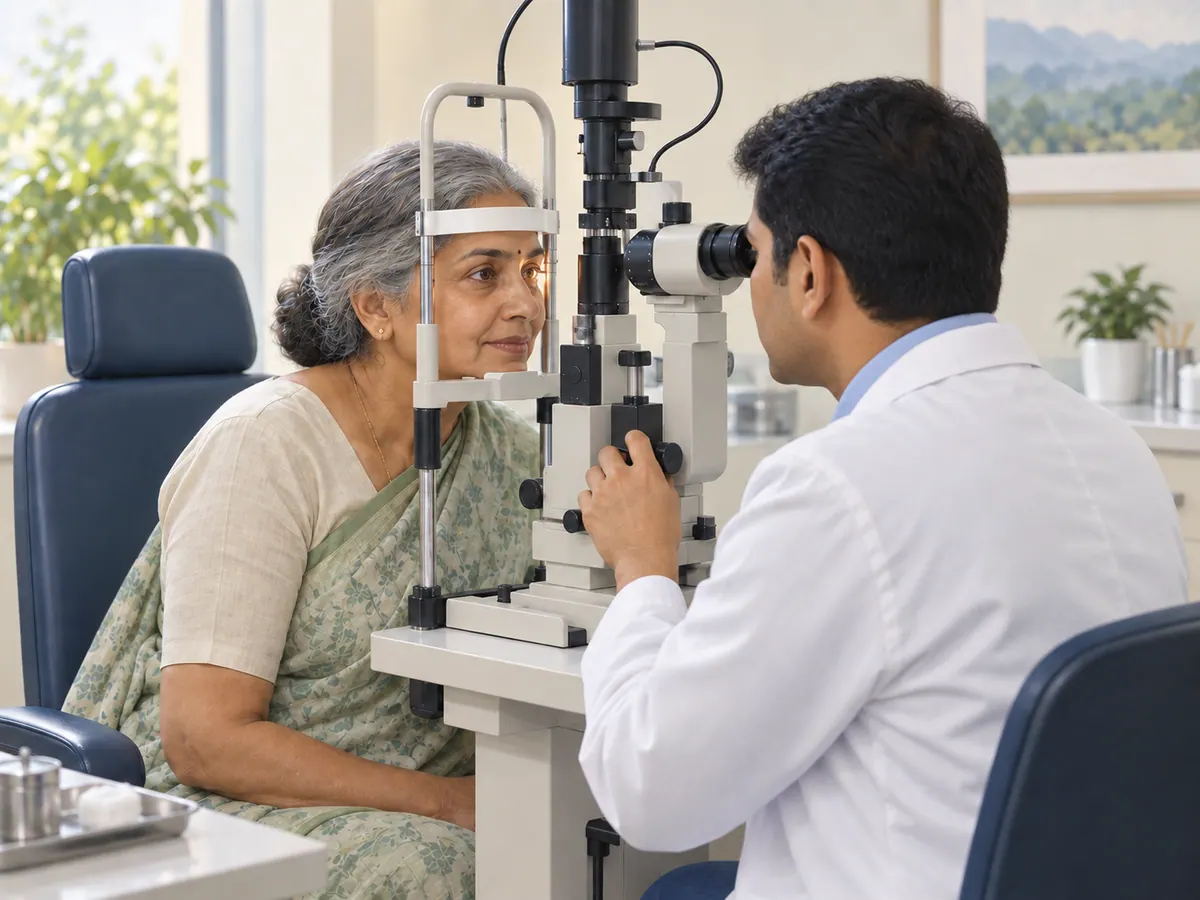
The pupil is dilated and anaesthetic drops are applied. Sitting at a laser microscope, you look toward a target while the ophthalmologist places focused YAG laser pulses into the cloudy capsule behind the implant.
Vision, implant position, capsule, pressure and the back of the eye are assessed.
The laser makes a central opening without a skin incision, stitches or removal of the implant.
Pressure or inflammation is checked as advised, and drops may be prescribed for a short period.
Dilating drops can blur near vision and increase light sensitivity for several hours. Small floaters are common initially. Arrange someone to drive you home if advised, use drops exactly as prescribed and attend the planned review.
for a sudden shower of floaters, flashes, a curtain or shadow, marked pain, increasing redness or a sudden drop in vision.
The aim is to improve vision limited by PCO. Improvement may be incomplete when another condition also limits sight.
Bring the cataract operation record, implant card, current glasses and previous retinal or glaucoma reports where available. The final recommendation depends on the capsule and the health of the whole eye.
Jaypuriya Eye and Women Care Centre
No. The cloudy natural lens removed during cataract surgery cannot regrow. Posterior capsule opacification is clouding of the thin capsule left behind to support the artificial lens implant.
Anaesthetic drops are used and most people experience little or no pain. You may see bright flashes and hear clicks. The outpatient laser treatment itself usually takes only a few minutes, although assessment and pressure checks take longer.
Some people notice improvement quickly, while dilation, temporary blur and floaters may take time to settle. Final vision also depends on the retina, optic nerve, cornea and other eye conditions.
The central opening created by YAG capsulotomy does not usually need repeating. Rarely, a small or incomplete opening or another membrane may require reassessment.
Medically indicated YAG capsulotomy may be covered by some policies, but outpatient benefits, waiting periods and pre-authorisation rules vary. The insurer or TPA makes the final decision.