
Detailed corneal screening
Refraction, maps, thickness, tear film and full eye health are interpreted together.
Detailed suitability testing and coordinated customised Femto-LASIK using WaveLight FS200 femtosecond and SCHWIND AMARIS 750S excimer laser technology.
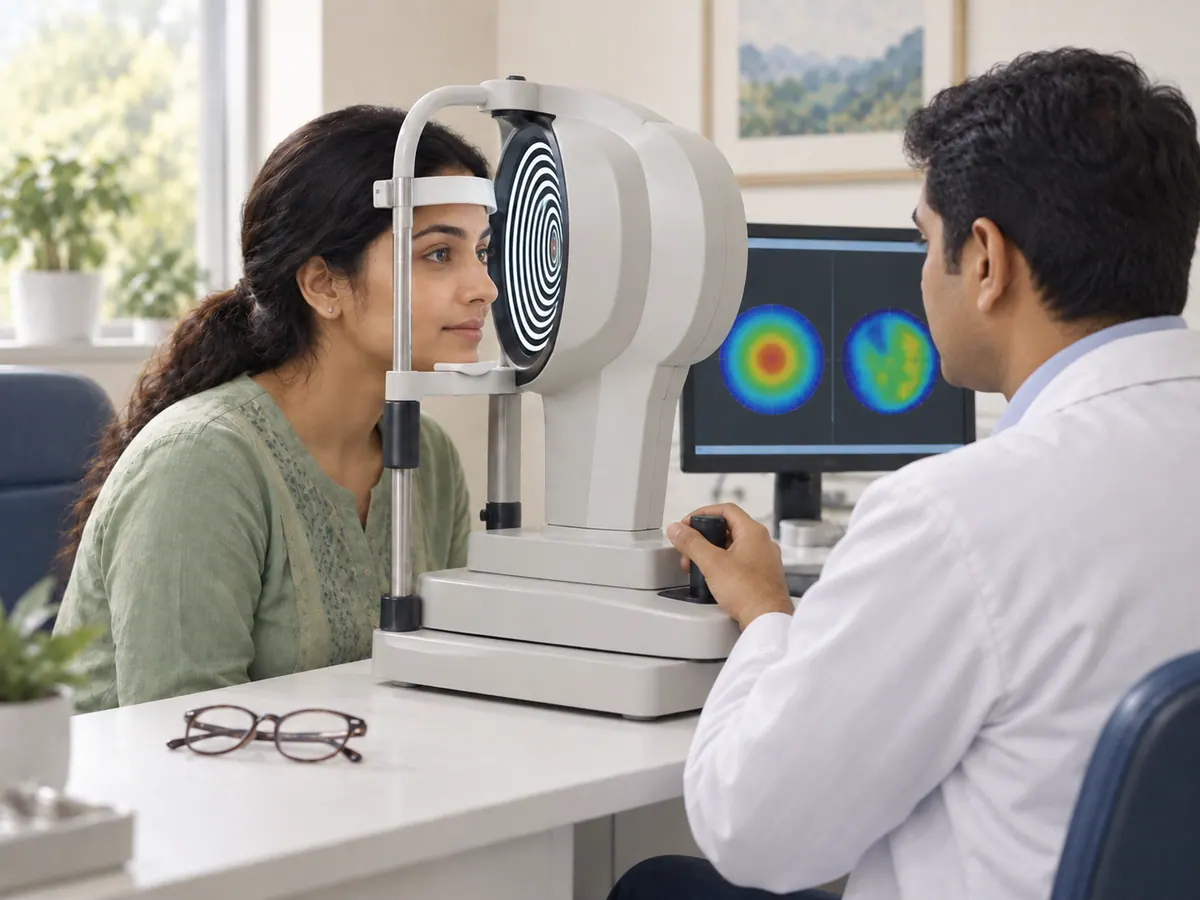
The most important LASIK decision is not the laser setting—it is whether an individual eye should undergo laser correction at all. JEWCC coordinates the journey from assessment and counselling to the operative plan and postoperative care.
Refraction, maps, thickness, tear film and full eye health are interpreted together.
Laser-created flap followed by computer-planned excimer corneal reshaping.
Customised LASIK, surface treatment or a non-laser alternative is considered according to suitability.
Written precautions, scheduled reviews and a direct route back to the JEWCC team.
LASIK—laser-assisted in situ keratomileusis—is refractive surgery intended to reduce dependence on spectacles or contact lenses. It changes the focusing power of the clear cornea at the front of the eye; it does not replace the natural lens or treat disease elsewhere in the eye.
In Femto-LASIK, a femtosecond laser creates a hinged flap. An excimer laser then removes a precisely planned microscopic amount of tissue from the underlying cornea to correct myopia, hyperopia or astigmatism within the approved and clinically suitable range. The flap is returned to position and begins adhering naturally.
An online checklist can prepare you for an appointment, but it cannot clear an eye for surgery. Corneal scans, tissue calculations and a clinical examination are required before a recommendation is responsible.
Contact lenses can temporarily alter corneal shape. The team will tell you how long to discontinue them before scans and final planning. Bring old prescriptions so stability can be assessed rather than assumed.
Arrange your screeningDistance power, astigmatism and best-corrected vision are measured carefully. A prescription that is still changing can make the result less predictable, so stability over time matters more than a single number.
A detailed shape map looks for asymmetry, irregularity and signs of keratoconus or other corneal weakness. This is central to deciding whether laser reshaping is safe and which treatment profile may be appropriate.
Pachymetry measures corneal thickness. The proposed correction is then considered alongside flap depth, ablation depth and the tissue expected to remain; a cornea can be too thin or structurally unsuitable even when the power is treatable.
Dry eye, allergy and lid-margin inflammation can reduce comfort and visual quality after surgery. Treating the ocular surface before final measurements makes the plan more reliable and recovery more comfortable.
Pupil size in dim light, corneal diameter and visual needs—especially night driving—help the surgeon discuss glare, haloes and the treatment zone. Device limits and the individual corneal map are reviewed together.
The lens, pressure, optic nerve and retina are examined as indicated. Cataract, glaucoma, retinal disease, previous infection or another eye condition may change the recommendation or make a different procedure safer.
JEWCC coordinates procedure access after suitability is confirmed. The final platform, treatment profile and operative details are documented during surgical planning; technology supports the surgeon’s judgement rather than replacing it.
Creates the corneal flap with programmable diameter, shape, hinge and side-cut parameters tailored to the operative plan. The manufacturer describes the platform as a femtosecond system for customised LASIK flap creation.
Performs the computer-planned corneal ablation. The 750 Hz excimer platform incorporates multidimensional eye tracking intended to follow eye position while the programmed tissue reshaping is delivered.
Model names describe the planned technology pathway, not a promise that every eye is suitable for LASIK or a specific treatment profile. Availability and the final operative plan are confirmed after evaluation.
LASIK is usually a day-care procedure under anaesthetic drops. Exact timings, treatment of one or both eyes and medicines vary, so the treating team’s written instructions take priority over general guidance.
Stop contact lenses for the period advised before final measurements. The surgeon reviews refraction, scans, corneal tissue, ocular surface, health history, medicines, occupation and expectations before recommending a procedure.
After anaesthetic drops and sterile preparation, the WaveLight FS200 femtosecond laser is used to create the planned corneal flap. Temporary pressure and dimming of vision can occur during this step.
The flap is lifted and the SCHWIND AMARIS 750S excimer laser reshapes microscopic layers of corneal tissue according to the programmed correction while its tracking system monitors eye position.
The flap is returned to position and checked. Drops, protective shields and written precautions are provided; the patient needs an escort and must not drive home.
Visual recovery is often fast, but healing is not complete simply because the chart looks clear. Dryness and fluctuation may continue while the ocular surface and corneal nerves recover.
for increasing pain, marked redness, discharge, injury, a sudden drop in vision, new severe light sensitivity or symptoms that worsen instead of improving.
Watering, light sensitivity, grittiness and fluctuating blur are common initially. Rest with the eyes closed, use medicines exactly as advised and avoid rubbing or squeezing the eyes.
The cornea and flap are checked at the scheduled visit. Many people see functionally better quickly, but clarity, dryness and night vision can continue to settle over weeks or longer.
Keep water, dust, eye makeup and accidental contact away for the period advised. Driving, gym, swimming and contact sports resume only when the treating team confirms it is safe.
Continue routine eye examinations. LASIK does not prevent presbyopia, cataract, glaucoma or retinal disease; always tell a future cataract surgeon that corneal laser treatment was performed.
Risk depends on the eye, prescription, device, procedure and healing response. Careful screening reduces avoidable risk but cannot remove every complication.
The final cost can depend on the procedure, diagnostics, treatment profile, medicines and follow-up. A low advertised price may not describe the same screening or technology pathway.
Most standard health-insurance policies treat refractive laser surgery as elective and do not cover it, although policy-specific or employer benefits can differ. Confirm written eligibility and exclusions directly with the insurer or TPA.
Call before travelling so the team can guide you about contact-lens discontinuation, previous records and the most suitable appointment. After screening, JEWCC coordinates operative planning and follow-up without presenting the procedure as an in-centre walk-in service.
Jaypuriya Eye and Women Care Centre
Power alone cannot answer this. The surgeon considers the treatment range of the laser, corneal shape and thickness, the tissue expected to remain, tear film, pupil size and overall eye health. Some high prescriptions are better served by contact lenses, a surface procedure or an implantable-lens assessment.
No medical procedure can guarantee a particular line on the chart. The aim is to reduce dependence on glasses or contact lenses. Residual power, regression, dry eye, night-vision symptoms or another eye condition can affect the result, and glasses or an enhancement may still be needed.
It uses detailed corneal-shape measurements as part of treatment planning rather than relying only on the spectacle prescription. It requires repeatable, high-quality maps and is not automatically the best profile for every eye; the surgeon selects the plan after reviewing all diagnostics.
The corneal flap is created with a femtosecond laser rather than a mechanical microkeratome blade. The word does not mean risk-free: flap, inflammation, infection, dry-eye and visual-quality complications remain possible and are discussed during consent.
Many people return to desk work within a few days, but recovery varies. Do not drive on the day of surgery. Driving, screen use, exercise and other activities should resume only when vision, comfort and the postoperative examination make them safe.
Possibly. LASIK does not stop natural ageing of the eye. Presbyopia commonly creates a need for reading help in the 40s and beyond, while power can change and cataract can develop later. Monovision may suit selected patients but should be discussed and, where possible, simulated before surgery.
JEWCC coordinates the operative pathway after suitability is confirmed. The procedure date and accredited operating facility are explained directly during planning; preoperative guidance and follow-up are coordinated through the JEWCC team.
LASIK is commonly treated as elective refractive surgery and excluded from standard health-insurance benefits. Some policies or employer schemes have limited allowances or defined exceptions. Confirm the written policy terms before booking; the insurer or TPA makes the final decision.